Foam-in-Place Versus Engineered Dunnage for Irregular Castings

Explore the advantages and limitations of foam-in-place and engineered dunnage when used to transport irregular castings.
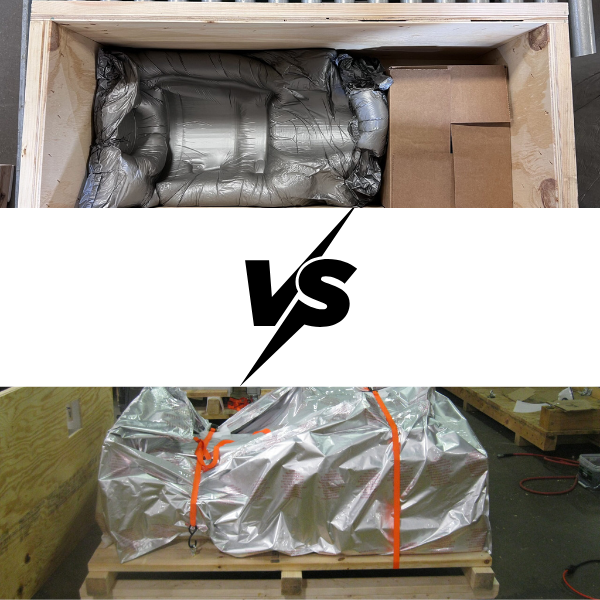
A product protected by foam-in-place in one corner with a product wrapped in custom-engineered dunnage in the other corner. The words 'Vs' are between them

Castings often need less intensive protection than other products. However, irregular castings may require more stabilization and protection during. The thick, heavy parts of the casting need support that won’t collapse or give way under their own weight, and any protruding, thin, or overhanging features need extra protection.

Two of your best options for protecting castings during transport are foam-in-place packaging and custom-engineered dunnage. Each provides a different balance of benefits and limitations, and choosing the right option for each part requires some consideration.
Foam-in-Place Packaging

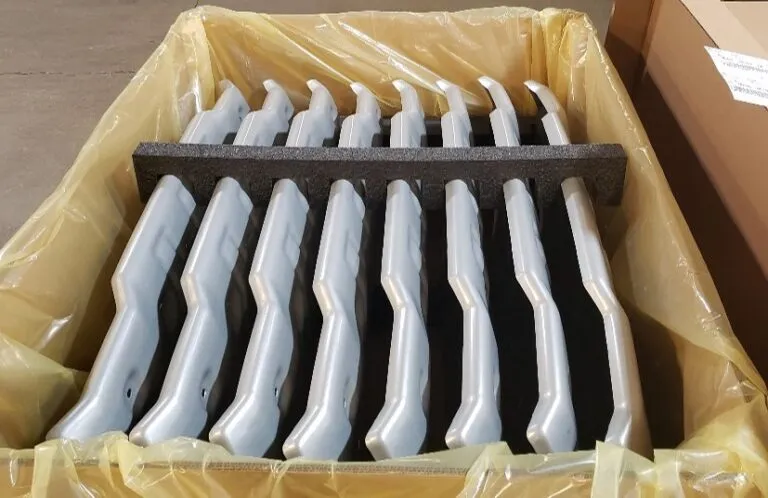
Skid plate packaged and ready for shipping

Often used for shipping complex casted automotive parts, aerospace components, and heavy equipment components, foam-in-place packaging is adaptable and quick to set up. It relies on an expanding foam contained inside a sturdy plastic wrap, allowing the material to conform to the exact shape of the product without adhering to the surface.
Advantages

  • Impact Resistance: Foam-in-place provides the shock absorption needed to protect fragile parts during shipping.
  • Fast: The setup time is incredibly fast, even for castings with unique shapes and unusual undercuts and protrusions.
  • Sturdy: Expanding foam eliminates most voids, preventing shifting or rocking.
  • Less Work: Since the foam does most of the work of conforming to the shape of your castings, shipping and packaging labor often drops.

Limitations

  • Not a Universal Solution: Foam-in-place doesn’t work for all shapes, so highly complex parts may still leave voids in the foam.
  • Higher Initial Cost: The initial cost for foam-in-place packaging materials is much higher than custom-engineered dunnage. Additionally, depending on the part’s weight, size, and complexity, it may not offer the same level of protection as a custom design.
  • Not Sustainable or Cost-Effective: If you’re concerned about reducing packaging costs through reusability or meeting sustainability goals, foam-in-place dunnage is unlikely to be a good fit.
  • Not as Durable: Although most foam products are contained in a wrap or film that prevents contact with the surface, there’s still a chance of breakage or residues left by the materials on castings.
  • Larger Footprint: Foam blocks can get quite bulky and take up more space in shipping containers.

Custom-Engineered Dunnage

A custom-engineered wooden box

As the name suggests, custom-designed dunnage is built to match each casting you’re shipping. Despite the initial time required to engineer the dunnage, the cost is often lower than with foam-in-place products.

Advantages

  • High ROI: Getting dunnage designed for your castings is more affordable than you might think. The opportunity to reuse materials for parts that don’t change design between orders is one definite cost-saving feature compared to foam-in-place materials.
  • Good for High-Volume Orders: Once the design is complete, custom dunnage can be easily produced in mass without high costs.
  • Better Protection: You’ll get more guaranteed protection from a design built around your specific product. While foam can conform to a wide range of shapes, it always poses a chance of forming a void that allows your part to shift or twist in transit. If you’re shipping critical defense or aerospace parts, only custom-engineered dunnage will do.

Limitations

  • Longer Setup: Setup takes longer since design work is needed before packaging is built. The designs are also tested for durability and quality, which adds to the lead time.
  • Not as Flexible: Every change to part geometries, no matter how small, will trigger a change in the packaging.

Tell Us About Your Project

The best packaging solution for castings varies based on the part’s design, the quantity of parts being shipped, and the distance they’re traveling.

If you need help finding the right solution for your project, contact our team at Export Corporation today. We have over seven decades of experience designing and building custom crates, engineered dunnage, bulk expendable packaging, and more for clients in the automotive, military/defense, and commercial sectors. Visit our website to learn more about our capabilities.

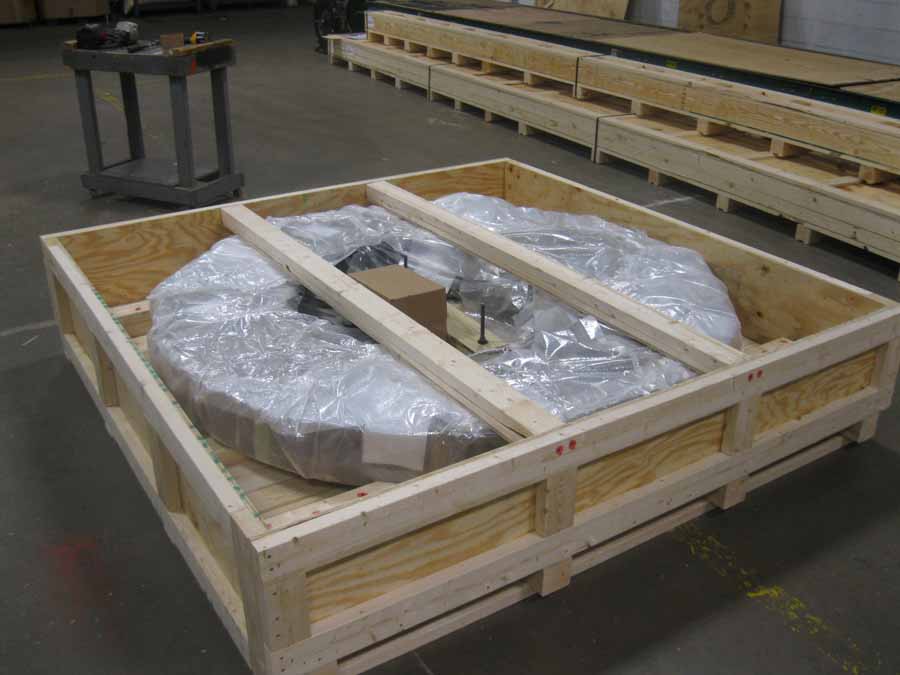
Skid plates packaged in a custom crate

Your Turnkey Packaging Partner

Send us details about a packaging project you need, and a member of our expert team will be in touch.