Top 5 Factors to Remember When Packaging Your Wooden Crates
Export packaging is a challenge for most companies. Read our top five factors to remember when you’re packaging and exporting wooden crates.
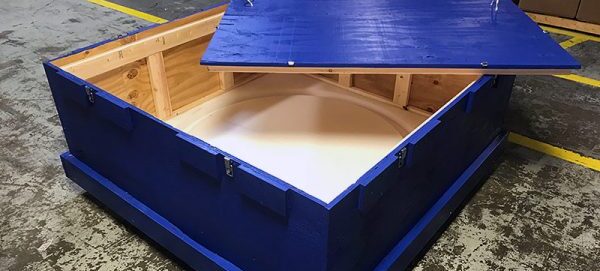
Export packaging is a challenge for most companies. Read our top five factors to remember when you’re packaging and exporting wooden crates.
Although wood packaging may seem simple on the outside, it’s anything but. Contractors and manufacturers must stay compliant with a wide array of stringent regulations that vary from country to country. Failing to comply with guidelines will result in long delays, potential return of the shipment, and possibly hefty fines. There are also other factors that may influence the overall price of the shipment.
To ensure a smoother transportation process, it’s vital that all wooden crates and tertiary packaging materials are designed, built, and marked with efficiency and compliance in mind.
So…how do you efficiently design, build, and mark wooden crates? During the packaging process, you should always keep these five factors in mind:
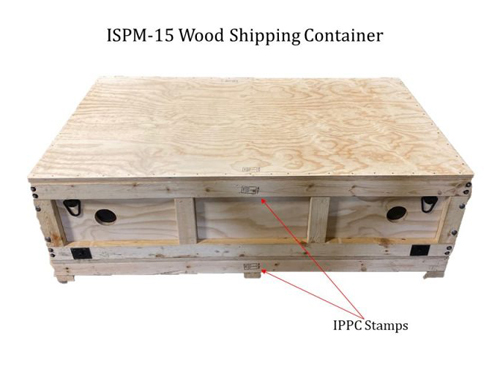
Before you even design your wooden crates, you’ll need to understand which regulations you must comply with. Regulations not only affect how the packaging will be designed but also what type of markings you need to include on the packaging itself. For wooden crates, there are two specific regulations to keep in mind: ISPM 15 and military packaging codes.
The International Standards for Phytosanitary Measures No. 15 (ISPM-15), created by the International Plant Protection Convention (IPPC) over 30 years ago, governs how wood packaging materials (WPMs) are treated.
The ISPM-15 crate standards involve the use of heat treatments for WPMs that are being exported from a member country. Special heat treatments ensure ISPM-15 crates and other wood packaging materials are disease-free and pest-free prior to reaching a destination country.
Additionally, specs regarding wood packaging material leaving and entering the U.S. are enacted by the Department of Agriculture, Animal and Plant Health Inspection Service.
To certify that WPM has been properly treated to prevent plant-damaging insects from infesting another country, the USDA mandates the following marks on all WPMs:
These marks must be permanent and clearly visible on two or more opposite sides of each ISPM-15 crate. WPM materials do not include corrugated board, particle board, plywood, fiberboard, or veneer. Read our blog on ISPM-15 to learn more about compliance with this regulation and what may happen if you don’t follow the guidelines.
Mil spec marks are military specifications indicating the operational and physical characteristics of products being shipped to and from the U.S. They also designate WPM compliance with specific Department of Defense mandates. For example, sheathed panelboard crates must comply with the ASTM-D-6256, which states that they can only be used to transport loads weighing less than 2,500 pounds. Other specs describe how wooden crates should be treated to avert insect infestations or secure volatile items.
To learn more about other mil spec packaging codes, please read our Understanding Mil Spec Packaging Regulations & Codes article.
Next, there are a variety of symbols that indicate how a package should be handled to protect its contents and the people handling them.
Commonly used symbols are internationally standardized by ISO 780 or DIN 55-402, and include the following black and white graphical markings:





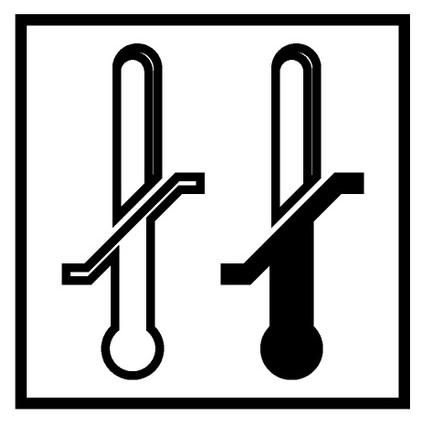
Companies should be aware that failing to put special handling symbols on their wooden packaging will force them to be financially responsible for damage to their shipments due to mishandling.
In addition to knowing what types of regulations you must follow, it’s important to understand the rules and regulations of the country you’re shipping the wooden crate to, to avoid costly returns and fines.
For example, any WPM being shipped to the United States must either be heat-treated to a minimum of 56 degrees Celsius for at least 30 minutes OR fumigated with methyl bromide in an enclosed area for at least 16 hours and aerated until the fumigant is below hazardous exposure levels. Comparatively, WPMs being sent to China must be made of debarked wood, be treated either via standard heat treatment, methyl bromide, or dielectric heating, and the IPPC marking pattern has to be rectangular or square.
Additionally, with ISPM-15, rules allow the receiving country to immediately export or fumigate the shipment at the expense of the company, as long as the noncompliant shipment is still in customs control or custody and the reason for refusing entry accompanies the rejected shipment.
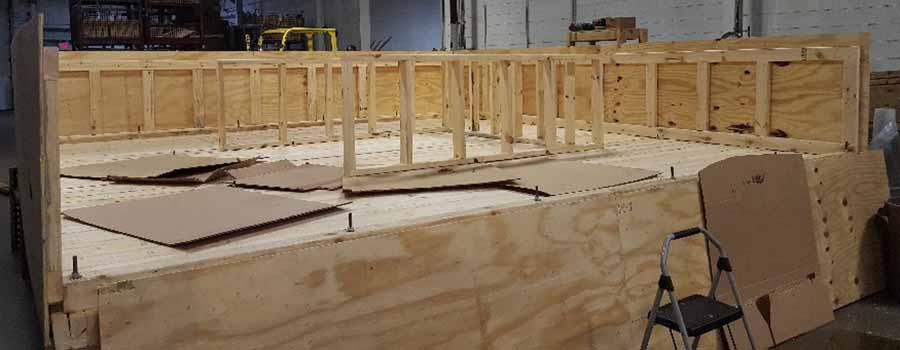
If you’re shipping large wooden crates, there are additional construction requirements that must be followed, including:
Lastly, you must know exactly how many boxes are being shipped per order and if the shipment can be palletized. There are some restrictions against palletizing, especially for military components being shipped. Palletized loads must not exceed specific size or weight limitations, depending on the type of items in the load (e.g., Level A versus Level B). For example, palletized Level A packaging may not exceed 3,000 pounds, while Level B packaging must be palletized if loads are less than 1,500 pounds, and when loads are more than 1,500 pounds but less than 3,000 pounds.
Additionally, you may also want to kit items, but not every item may be kitted together. Just like palletizing, there are many military regulations surrounding kitting.
Export packaging can seem daunting, but the process can be hassle-free when you work with Export Corporation. Founded over seven decades ago, our company specializes in designing and building wooden crates and other tertiary packaging for clients in the military, aerospace, and automotive sectors. We are globally recognized, ISO 9001-compliant, ISPM-15-compliant, and ITAR and SAM-registered.
If you have general questions about wood packaging or you would like to request a quote, please fill out our online form today.
Send us details about a packaging project you need, and a member of our expert team will be in touch.